Pool art techniques: how to choose the right one
Pool art techniques: how to choose the right one requires more than a visual reference. It requires a sequence of decisions that connects architecture, technical execution, everyday use and a clear artistic direction.
The starting point is not the shape
A pool art techniques project should begin by understanding the property, not by selecting an image from a catalogue. For new-build and renovation projects for villas, hotels and residences, the key is to choose between figurative pool art, sculpture and mosaic according to architecture, light, scale, use and underwater reading. The pool affects circulation, views, levels, shade and the way outdoor areas are inhabited. When these relationships are studied early, geometry becomes a consequence of the site rather than an arbitrary decision.
The first working session should define objectives, users, programme, level of artistic intervention and the professional team. This is also the moment to review the relevant Bassform service, identify missing information and establish decisions that must be made before technical development.
Architecture, landscape and real use
Architecture determines how the pool is seen and reached. Landscape determines the background, shade and relationship with planting. Real use determines depths, access, shelves and areas for rest. The risk is selecting a technique from a reference image without studying proportion, maintenance, support and installation conditions. A visually attractive pool can still fail if it makes movement difficult or does not support the property’s daily routine.
A useful design compares viewpoints from the residence, garden and water. It also checks sun, privacy and the relationship with terraces. This reading is particularly important in location-based projects, such as those developed around coastal properties in Spain, where exposure and outdoor use influence the solution.
The decisions that shape the result
The central decision is to compare visual presence, detail, volume, palette, production process and compatibility with the pool shell. Geometry, colour and technique must be reviewed together because each affects the others. A large composition needs distance to be read, sculpture needs support and depth, and mosaic requires a clear grid, joints and installation sequence.
Visualisations help compare alternatives before production. They are not decorative presentations: they test scale, contrast, movement and the appearance of the artwork beneath water. Reviewing the proposal from several viewpoints reduces changes and allows the project team to understand the intended result.
Choosing technique and materials
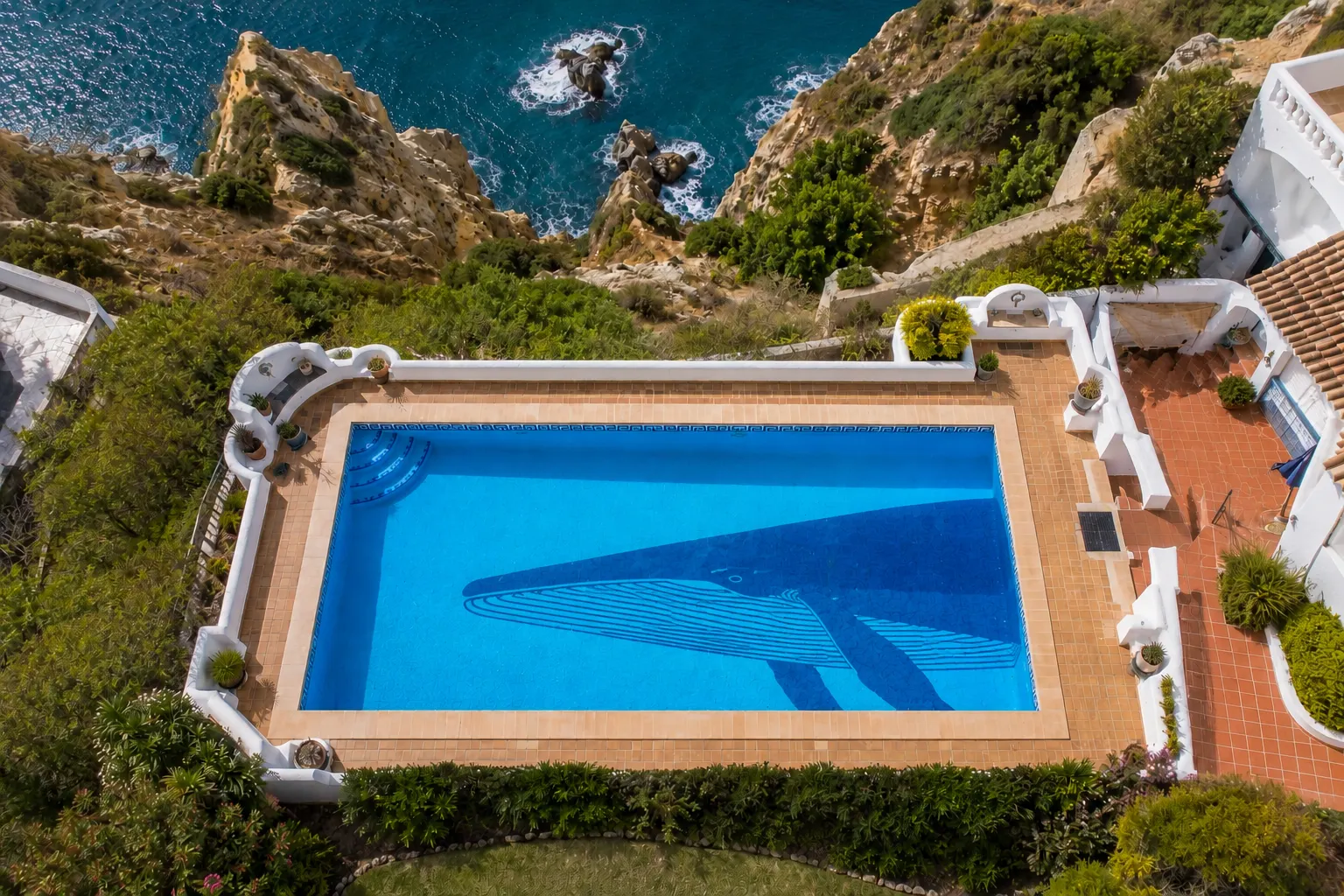
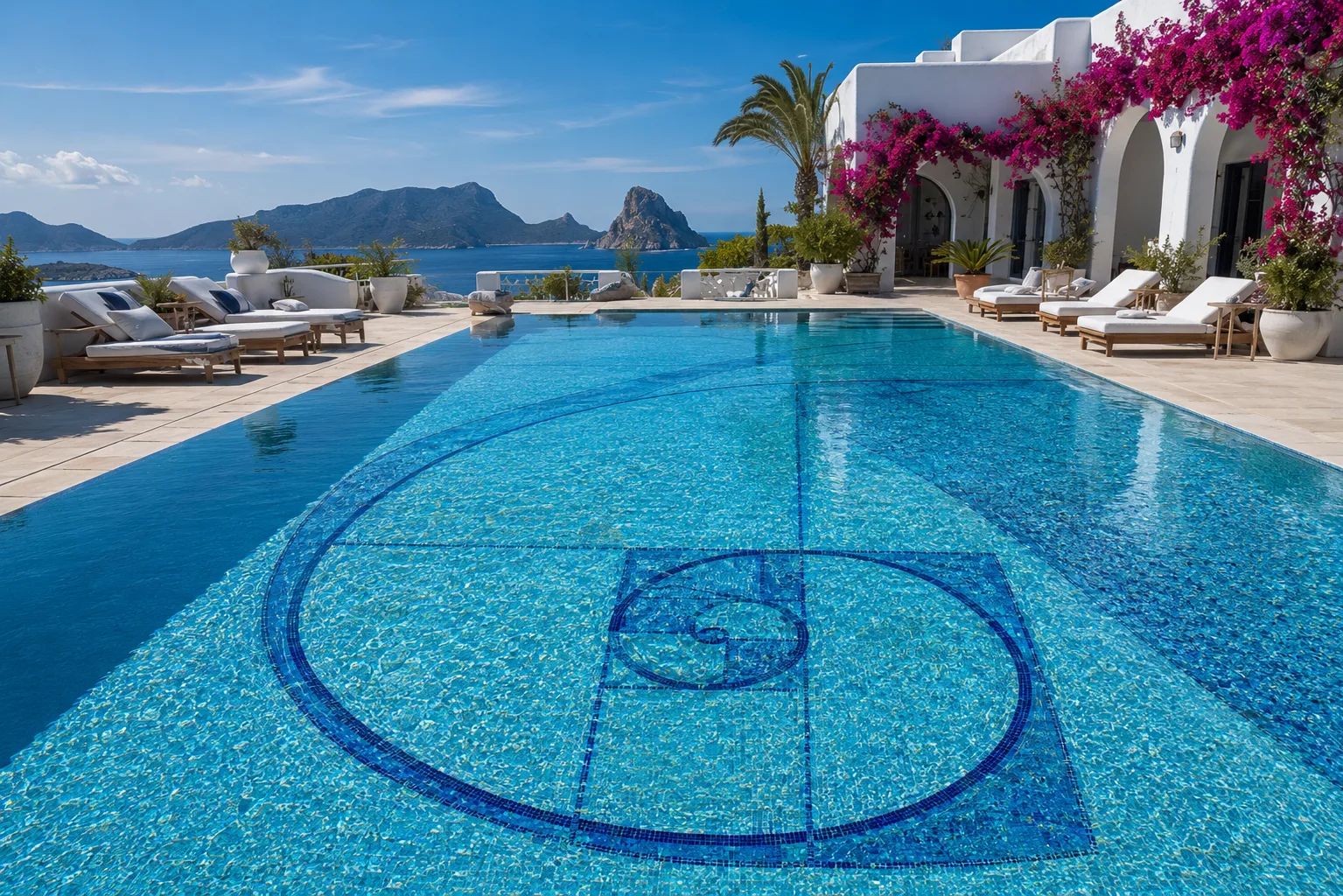
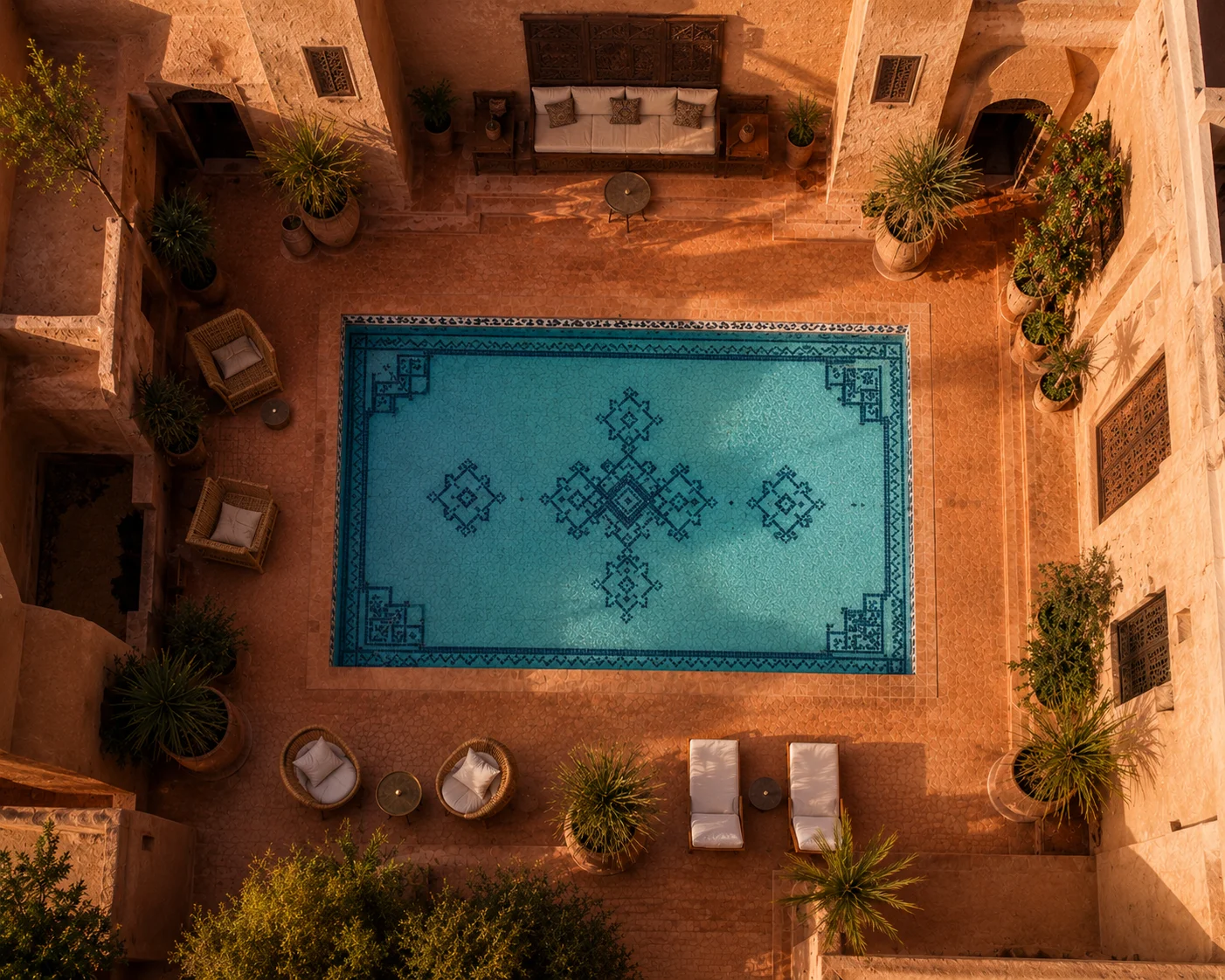
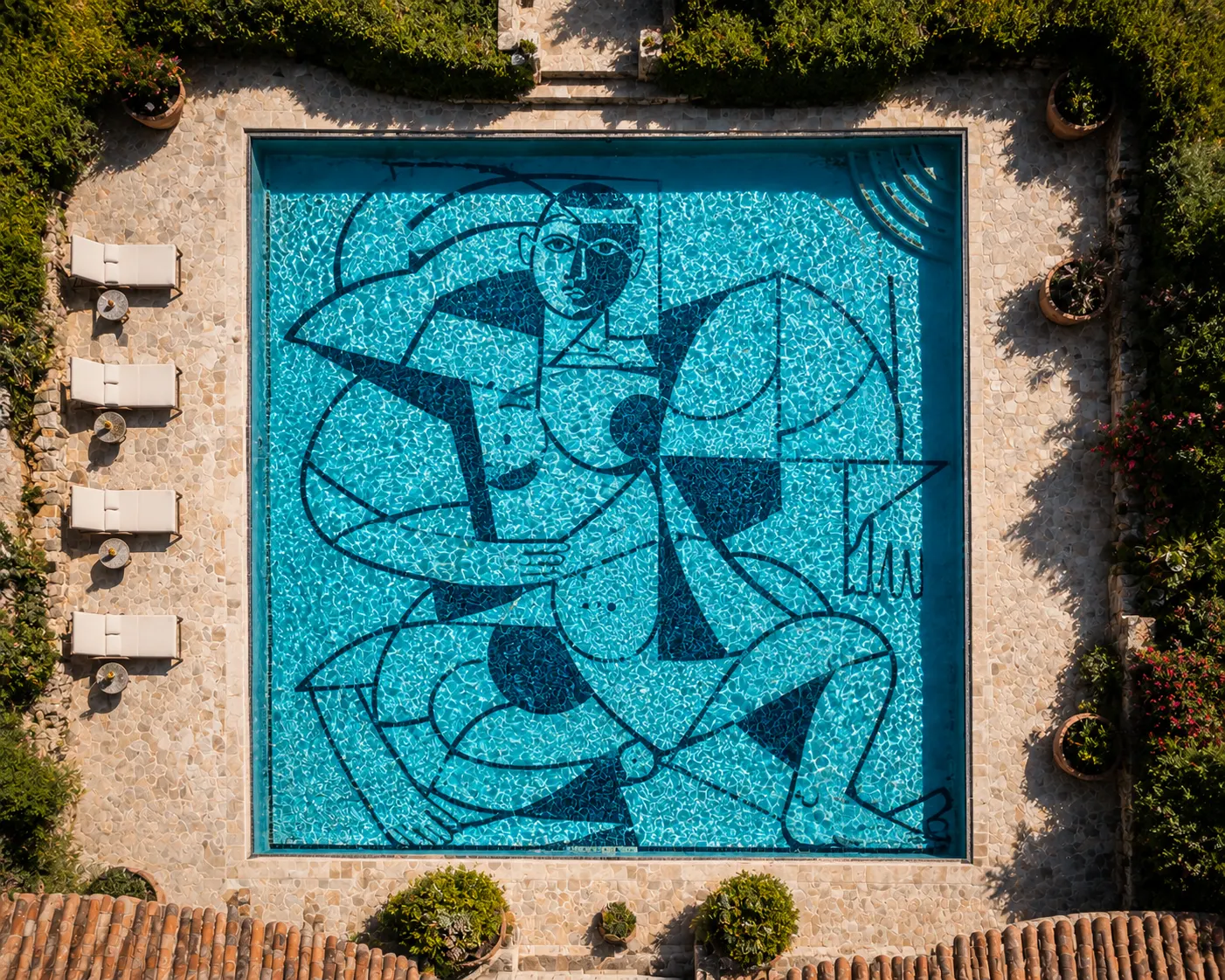
The three main Bassform disciplines are figurative pool art, sculpture and handcrafted mosaic. The choice depends on the visual role of the pool, support conditions, scale and maintenance expectations. The techniques section explains how each language behaves under water and what type of production it requires.
Materials must be considered as a system. Their compatibility with permanent immersion, chlorine, UV exposure, temperature changes, joints and support preparation matters as much as colour. The correct decision is not the most expensive material, but the one that performs consistently within the defined construction and maintenance process.
A coordinated process
A controlled project moves through listening, design, preparation, production and supervised installation. Each phase should end with a clear approval. This avoids advancing with unresolved dimensions or asking the installer to interpret a creative decision on site. Coordination is especially important when several companies are involved.
Bassform works with architects, contractors, project managers and local specialists. Responsibilities are established for the pool shell, waterproofing, services, support preparation, artistic production and final installation. The related project shows how an artistic technique can be integrated into a wider property rather than treated as an isolated finish.
Maintenance should influence design
Maintenance is part of design, not a later issue. The project should consider material, water type, exposure, cleaning, joints, possible repair and installation supervision. A composition may be visually successful but unsuitable if the operational team cannot inspect, clean or repair it properly. Clear maintenance criteria protect both the artwork and the pool system.
For hotels and shared pools, access and operation have greater weight. For private residences, seasonal use and periods of closure may matter more. In every case, the design should document materials and provide straightforward care guidance, avoiding unnecessary complexity.
Budget and programme
The budget is influenced by surface area, detail, material, manual production, support preparation and logistics. A useful estimate separates the pool shell, services, preparation, artistic production and installation. This makes decisions transparent and prevents the artistic work from absorbing costs that belong to structural or technical construction.
Programme is equally important. Custom work requires design reviews and production time. Starting early allows the proposal to be coordinated with construction rather than forced into a final gap. The objective is not to make the process longer, but to make each stage predictable.
Common mistakes to avoid
The most common mistakes include mixing too many visual languages, reducing scale without reviewing legibility and choosing colour outside the water. They usually appear when design, construction and operation are discussed separately. A coherent project gives each decision an owner and a deadline, and records approvals before moving forward.
It is also a mistake to add keywords or visual features that do not correspond to the property. A strong pool project is specific. Its value comes from the relationship between architecture, water, people and an artistic decision that makes sense in that setting.
Conclusion
The right technique is not the loudest one, but the one that best explains the project and retains its strength when water, light and time begin to act.
The next step is a concise project brief with location, property type, current stage, drawings or photographs and the intended use. With that information, the studio can identify the correct service, technique and coordination route.